
Crafting an Optimal Customer Journey
By Richard LloydI recently sat down with a client to assess the progress they have made on launching a new product. It is technically better than what is currently in the market, but we are getting little traction with the marketing. The outcome of the session was a review of the customer journey, I have found that a visualisation of the journey helps ensure all angles are covered.
At the core of crafting the ideal customer journey lies a sense of empathy – the ability to deeply understand and resonate with the needs, aspirations and challenges of your client. Each touchpoint along their journey, from initial touch to post-purchase engagement, demands attention and alignment with the preferences and expectations of your target audience. Start by meticulously crafting comprehensive customer personas, and delineating profiles of your ideal client, encompassing demographics, firmographics, psychographics, and pain points. These personas serve as invaluable compasses, guiding every decision you make in sculpting the customer journey.
The Key Elements of any Customer Journey
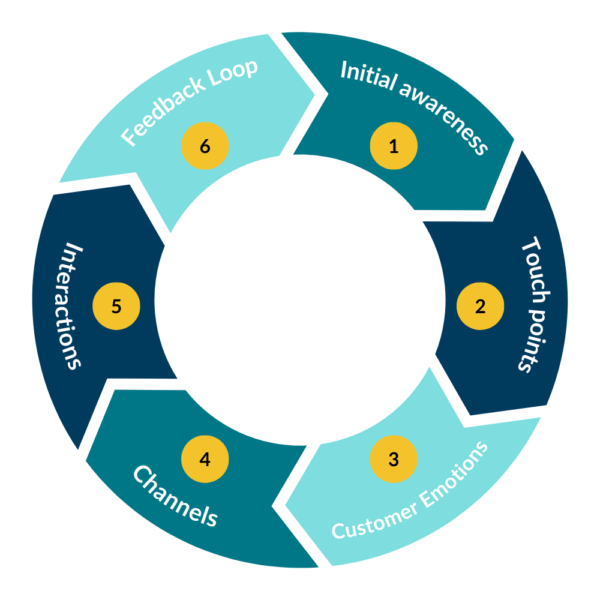
1. Stages of the Customer Journey
The journey begins with the initial awareness stage, where the customer becomes aware of your brand or product. This is followed by stages such as consideration, purchase decision, purchase, post-purchase experience and advocacy.
2. Touchpoints
Along the timeline, indicate various touchpoints where customers interact with your brand. These touchpoints could include social media, website visits, email newsletters, advertisements, in-store experiences, customer service interactions and more.
3. Customer Emotions
Overlay the journey with the emotions or sentiments typically experienced by your customers at each stage. For example, during the awareness stage, they might feel curiosity or intrigue, while during the post-purchase stage, they might feel satisfaction or disappointment depending on their experience.
4. Channels
Highlight the channels or platforms through which customers engage with your brand at each touchpoint. This could include online channels like social media, email, website, as well as offline channels like physical stores or customer service hotlines.
5. Interactions
Showcase the interactions that take place at each touchpoint. For instance, at the consideration stage, customers might be comparing product features or reading reviews, while at the purchase stage, they might be adding items to their cart and completing transactions.
6. Feedback Loop
Illustrate how feedback from customers at various stages of the journey feeds back into the process, influencing future interactions and decisions.
A well-constructed customer journey mirrors a precisely choreographed ballet, each step seamlessly transitions into the next. Map out the entire journey with meticulous detail, delineating every touchpoint across diverse channels – spanning social media platforms and website interfaces to physical store encounters and customer service interactions. By holistically visualising the journey, you can identify areas of friction and avenues for enhancement, fostering a cohesive and immersive experience at every juncture.
Ultimately, the pursuit of an optimal customer journey necessitates an unwavering commitment to understanding your clients, an embrace of personalisation and omnichannel proficiency, and an unrelenting dedication to transparency and iterative enhancement. By centring the customer experience at the heart of your operations, you can forge enduring connections, foster loyalty and catalyse sustainable growth amidst an ever-evolving marketplace. Let us thus embark on this collective journey, charting a course towards unforgettable experiences that resonate deeply with your clients and propel your business to success.
Need help with your customer journey, feel free to get in touch below or via LinkedIn.